Showing posts with label american history. Show all posts

Secret Daughter: A Novel Review

Secret Daughter: A Novel
Average Reviews:

(More customer reviews)
This beautifully written book, Secret Daughter: A Novel, is one that will linger in my thoughts for a long time. It's a poignant story about family -- just who is "family" and what it means to be a part of one. It's also a brilliantly written testimony to mothers everywhere, for "if the mother falls, the whole family falls."
Asha (Hope) was secretly named Usha (Dawn) by her birth mother, Kavita, and is adopted from an Indian orphanage by a married American couple when she is just a year old. Kavita, already grieving the infanticide of a previous daughter in a society that prefers male infants, had made the long journey to Shanti to deliver her 3-day-old child there for safety so that her husband and his family would not also destroy this second unwanted female child. She left her daughter with only a thin silver bracelet and a wish that Asha be allowed to live, grow up, and perhaps have a better life.
Somer and Krishnan Thakkar, both doctors -- she's a pediatrician and he's a neurosurgeon -- have been unable to have a child. He is Indian and came to America to attend medical school and stayed for a better life. She married him without fully appreciating the Indian heritage and his connection to the land of his birth and to the family and traditions he left behind there. When they adopt Asha and bring her back to America to raise, little do they realize that their new beloved daughter will one day defy her parents and seek to restore their connection to their Indian relatives despite the fact that she may hurt them when she begins to trace her birth parents to find out who she is and why they gave her up for adoption.
The story moves forward in time from 1984 to 2009, and is told from the viewpoints of the three main females of the story - Somer, Kavita, and Asha. All are women who have a very strong feeling about motherhood -- and about their own mothers. In addition, each woman sees a different India and comes to appreciate the country in different ways even as they realize that "Mother India does not love all her children equally."
The story of each woman's journey to epiphany and self-realization is very moving and satisfying. I highly recommend this book.

Click Here to see more reviews about: Secret Daughter: A Novel


Buy NowGet 44% OFF

Click here for more information about Secret Daughter: A Novel

Read More...

Wyatt Earp: The Life Behind the Legend Review

Wyatt Earp: The Life Behind the Legend
Average Reviews:

(More customer reviews)
Casey Tefertiller has written a very well researched, totally fair, and engrossing book about the most famous person of the old west.
He approaches Earp's life with an open mind and captures the essence of the man without nominating him for sainthood or branding him as the next satan.
He provides the detail from Earp's early years which help shape his adult personality and actions in Dodge City and Tombstone. He does not attempt to hide the seedy side of Earp's life during those years or the fact that Earp was not above using people or events to advance his cause or personal gain.
The most important part of the book is the detailed discussion that explains the reasons for the gunfight with the Clantons and his revenge against the cowboys,for the murder of his brother, that showed Earp to be more ruthless than any outlaw of his time.
It has always amazed me that movie makers during the 1950s, 60s, and 70s, dreamed up total fiction about Earp instead of using the truth. I have to credit the makers of "Wyatt Earp" and "Tombstone" for correcting this error. Both movies capture the soul of Earp in different ways.
If you are going to read one book about Wyatt Earp, this is the one to read because it is the best. If you want to read another, try "Inventing Wyatt Earp". It was written about the same time as this book and is very good.

Click Here to see more reviews about: Wyatt Earp: The Life Behind the Legend


Buy NowGet 32% OFF

Click here for more information about Wyatt Earp: The Life Behind the Legend

Read More...

By the Great Horn Spoon Review

By the Great Horn Spoon
Average Reviews:

(More customer reviews)
When I was nine, I read this book. At age 40, I read the same copy to my children, ages ten and eight. As much as I enjoyed reading it the first time, reading it out loud was a much richer experience.
The writing flows naturally, and encourages a great variation in expression. The adventure truly comes out in the reader's voice. I am an actor, but I felt that this story would bring out the actor in anybody.
The story was so exciting and surprising that long reading sessions never dragged. At several points, my children threw themselves down on the floor and yelled, "Oh my gosh!"
This experience brought it all together for me, if I may speak personally: books, performing, involvement with my children, a classic story that I relished as a child myself. Those evenings added up to the happiest time of my life.
The plot concerns a boy who runs away during the California gold rush--with his butler!--to try to get his family out of debt. The adventures along the way are episodic, and each episode is an amazing and believable story in itself. Every step in the journey is given full attention: the voyage from Boston to San Francisco, the trip to the gold fields, the experiences among the miners. There are plenty of colorful characters, and plenty of opportunities for the two main characters to grow. There are also several threads that run through the whole story, maintaining suspense. Their resolution is unpredictable and satisfying.
There was very little in the book that could make a parent squirm, and very little that sounded out of date. But there were three moments that made me pause: 1) There is a fist fight, though it is handled in a light-hearted way. 2) There is a reference to corporal punishment when an adult threatens to "take a hairbrush" to a child. 3) There is an expression used once that might be innocent for all I know, but sure doesn't sound that way: "That's mighty white of you."
Minor reservations, I hope you'll agree. So plunge in and have an experience you and your listeners will never forget.

Click Here to see more reviews about: By the Great Horn Spoon


Buy Now

Click here for more information about By the Great Horn Spoon

Read More...

Rich Shall Inherit, The Review

Rich Shall Inherit, The
Average Reviews:

(More customer reviews)
This is the unforgettable and totally captivating story of Poppy Mallory. From Poppy's tragic youth spent with a n'er-do-well gambling addict who allowed her to be raised by ladies of the evening and orphanages, to her rise as a notorious woman of France, I was totally engrossed in finding out what would happen next. A life punctuated by lost love and the great sadness of giving birth to two children she could never fully know, make this one of the best novels I've read this year.
When investigative journalist Mike Preston is commissioned to find the missing heir/heiress to Poppy Mallory's fortune, he uncovers an incredibly tangled family tree and uproots all its darkest secrets. From California to Venice to Paris and around the globe, this fascinating story unfolds with a richly-textured plot and distinctive characters.
From the very beginning, when Poppy's father Jeb Mallory concocts a plan with immigrant Nikolas Konstant, the story leads readers on a magical mystery of scandals, lies, and deception. Who will emerge as the true heir becomes almost second in importance to the interesting lives Poppy, her friends, and descendents live. Her childhood friends Angel and Greg Konstant, her first love Felipe and her unforgettable lover Franco as well as all the offspring of these characters are woven into a remarkable tale that you won't want to put down. This book is ingenious, well-plotted, and totally intriguing. I look forward to reading more by this author.

Click Here to see more reviews about: Rich Shall Inherit, The


Buy Now

Click here for more information about Rich Shall Inherit, The

Read More...

Contested Waters: A Social History of Swimming Pools in America Review

Contested Waters: A Social History of Swimming Pools in America
Average Reviews:

(More customer reviews)
Here comes summer, and Americans will head for a trusted way of getting rid of stress and heat: they will jump into swimming pools. But pools themselves have been a source of stress to many communities within the nation; indeed, Jeff Wiltse has written a history of the social tensions pools have caused (and sometimes eased) in _Contested Waters: A Social History of Swimming Pools in America_ (University of North Carolina Press). It is surprising that what might seem a trivial subject, a pastime in which millions of Americans have innocently indulged for over a hundred years now, might even have a history. But Wiltse, who teaches history at the University of Montana, has driven from town to town to draw information for this book. His travels were mostly in the north, for he did not want to range too far and write separate regional histories, although he says the pattern of social use of pools is consistent within the towns he surveyed. He amassed a huge amount of data from newspapers and civic documents about who was using the pools, with statistics often kept by race and sex. Wiltse has shown beyond doubt that pools have reflected and generated our feelings on sexual and racial matters, and although his book is a serious academic history, it is by turns amusing and sad as America came to an incomplete understanding of how we ought to treat pools and the swimmers who use them.
We didn't have pools originally, going down to swim in the river or "the old swimming hole". The swimmers often had no running water at home and this was a way for them to wash away some bodily grime; their Victorian betters strongly agreed with bathing for this purpose, but not with the way it was being accomplished. The problem of how to get those underclass clean without letting their pastoral cavorting offend others resulted in a solution, the first municipal bathing pools. Remarkably, there was not racial segregation in these initial pools. Pools changed again when they became not centers for training but locales for play. The huge pools were viewed as resorts, places where a family might come on vacation, and they had sand around them for artificial beaches. Pools had been segregated by gender, but these were not; because of fretting over what might happen if white women saw athletic black bodies, or if blacks started appreciating the displayed bodies of white women, racial segregation of pools began. There was violence in many cities when black people tried to use the pool. The way one city after another attempted to exclude black people in different ways makes for uncomfortable reading.
Desegregation eventually happened, but the victory turned out to be Pyrrhic. As blacks were admitted, white swimmers stopped going to the public pools, and so it became easier for cities to reduce maintenance on the pools, which fell into disrepair and were closed. Cities had financial crises in the 1970s, further reducing pool budgets, and have never started up another building surge. White swimmers went to private pools or home pools, and Americans aren't putting a high value on public recreation as much as they used to. Suburban communities are building water theme parks, which are busy places for kids, but do not foster the socialization that families used to find around a public pool. It may not have worked out to be the best outcome for either blacks or whites, but that's the way history works out sometimes. Wiltse's readable history gives a surprising outlook on important aspects of American culture, and shows that swimming pools are far more consequential than you'd expect.


Click Here to see more reviews about: Contested Waters: A Social History of Swimming Pools in America


Buy NowGet 29% OFF

Click here for more information about Contested Waters: A Social History of Swimming Pools in America

Read More...

Picturing Chinatown: Art and Orientalism in San Francisco Review

Picturing Chinatown: Art and Orientalism in San Francisco
Average Reviews:

(More customer reviews)
Don't be misled by the choice of the title. The book is not a coffeetable-type photomontage of San Francisco's Chinatown. It is certainly replete with many photographs and illustrations from Chinatown of the 19th century and early 20th century. No doubt to some readers, these will be the main attraction. Revealing in often hazy black and white the details of a vanished and important subculture of the US.
But Lee has integrated the visuals with a narrative that places the images squarely in the context of when they were taken, and of the accuracy of their representations of that culture. He analyses the photographers that took these pictures, and their motives for doing so. Several were not of Chinese ethnicity. But sought to present visuals to explain what was then a very exotic society to an average white American reader.
Aside from the contemporary photos, Lee also explains the art that came out of Chinatown in those years. The artwork shown in the book tends to be quite different from the traditional Chinese calligraphy and landscape themes. Instead, there are traces of influence by the European and American art movements of the day.

Click Here to see more reviews about: Picturing Chinatown: Art and Orientalism in San Francisco


Buy Now

Click here for more information about Picturing Chinatown: Art and Orientalism in San Francisco

Read More...

America's Painted Ladies: The Ultimate Celebration of Our Victorians Review

America's Painted Ladies: The Ultimate Celebration of Our Victorians
Average Reviews:

(More customer reviews)
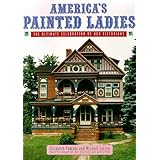
Each picture is more gorgeous than the next! On a more serious note, there is practical information on architecture and authentic Victorian painting techniques. I learned a lot about how to identify the type of building style, and got my fix for Painted Ladies more than satisfied. This is a comprehensive, informative, beautiful book, and I recommend it highly.

Click Here to see more reviews about: America's Painted Ladies: The Ultimate Celebration of Our Victorians

Now, the long-awaited companion to Painted Ladies, Daughters of Painted Ladies, and Painted Ladies Revisited is available in paperback. Presents a dazzling orgy of Victoriana inside and out with more than 400 color photographs of Painted Ladies across the country.

Buy NowGet 34% OFF

Click here for more information about America's Painted Ladies: The Ultimate Celebration of Our Victorians

Read More...

Erotic City: Sexual Revolutions and the Making of Modern San Francisco Review

Erotic City: Sexual Revolutions and the Making of Modern San Francisco
Average Reviews:

(More customer reviews)
There is certainly no dearth of historical work on sexuality and San Francisco, but Sides' contribution proves to be both productive and revelatory--in short, Sides has seriously moved urban and sexual history forward (he goes beyond the 1990s). And he has moved it well: Erotic City is truly a page turner!
Building on the work of historians such as Nan Boyd (see: Wide-Open Town: A History of Queer San Francisco to 1965), Sides not only maps San Francisco in terms of the still-resonant political and cultural developments that have taken place there since the WWII, but he does so by bringing readers to the streets, from neighborhood to neighborhood, so that we can witness the way in which the city was shaped by its many sexual "revolutions." What's more, Sides brings "heterosexuality" back into the postwar historiography of sexual geography in an artful way--before you know it, you've been transplanted from a discussion of pornography, to leather S/M clubs, to radical feminism, so that the reading experience comes to mirror rapidly changing cityscape itself.
One of many interesting details Sides marshals (a concept which comes up only very briefly in Marc Stein's City Of Sisterly And Brotherly Loves: Lesbian And Gay Philadelphia, 1945-1972) is that gay men were, for the Castro, the foot soldiers of gentrification--a point which has hitherto lacked sufficient attention in urban histories of sexuality. All told, Sides details the way in which the shifting spatial relations of power in the Erotic City were active in the production of sexuality and sexual experiences (in the most broad sense--read the book) as well as the way in which the city hosted and even created the conditions for the emergence of sexual identities, political factions, social and judicial controversies, and even revolutionary public health measures. And that emergent sexuality in turn left it's mark (for better and for worse) on the city.
All said, Erotic City is a tour-de-force tour of a city that you thought you knew.

Click Here to see more reviews about: Erotic City: Sexual Revolutions and the Making of Modern San Francisco


Buy Now

Click here for more information about Erotic City: Sexual Revolutions and the Making of Modern San Francisco

Read More...

Barons of Labor: The San Francisco Building Trades and Union Power in the Progressive Era (Working Class in American History) Review

Barons of Labor: The San Francisco Building Trades and Union Power in the Progressive Era (Working Class in American History)
Average Reviews:

(More customer reviews)
Kanin's research is solid, and for those interested in San Francisco during the Gilded Age, or labor history, this is a must-read. Focusing in on a clique of unionists that seized contol of the city government, with a particular emphasis on Patrick Henry McCarthy. No, he was not a typical business unionist, but rather a urban progressive who combined a pratical wage-worker consciousness with a social reform mentality. On the other hand, he had no problem fusing a racist ideology into his form of progresivism. If you bothered to read this review, buy this book.

Click Here to see more reviews about: Barons of Labor: The San Francisco Building Trades and Union Power in the Progressive Era (Working Class in American History)


Buy Now

Click here for more information about Barons of Labor: The San Francisco Building Trades and Union Power in the Progressive Era (Working Class in American History)

Read More...

A Short History of San Francisco Review

A Short History of San Francisco
Average Reviews:

(More customer reviews)
I curled up with this book shortly after I moved to San Fran (1993) and found it impossible to put down. Tom Cole ably illumines the life and times of America's oddest city. His research is exhaustive - we are early in the book given a lesson on the geologic origins of the Bay itself; which turns out to be as engrossing and ironic a tale as any from the Barbary Coast!! This is also one of the few works about San Francisco that gives the plight of Ohlone natives the attention and consideration it sorely merits. It is a mark of Cole's considerable talent that he can tell one story with such sensitivity and, just pages later, transport us quite heart-poundingly into the throes of 'one of the most rip-roaring events in human history: the California gold rush.' If you like history, or travel, or California, or San Francisco, or plain ol' good reading, 'A Short History of San Francisco' delivers exponentially more than its $12.95 pricetag's worth. Super-recommended!!

Click Here to see more reviews about: A Short History of San Francisco


Buy Now

Click here for more information about A Short History of San Francisco

Read More...

Gables and Fables: A Portrait of San Francisco's Pacific Heights Review

Gables and Fables: A Portrait of San Francisco's Pacific Heights
Average Reviews:

(More customer reviews)
I just bought this book from Amazon.com after seeing it displayed at Gumps in DT San Francisco (I had recently took a trip out there for work). Having actually lived in the Pacific Heights area (for seven years in the 1990s), I was excited to see a book about many of the houses and apartment buildings that I used to regularly walk by. I was always curious about who lived in them and what they were like on the inside.
After reading several of the book's chapters, I am thoroughly disappointed with the lack of detail. Personally, I have learned so much more by reading my old Access Travel Guide to San Francisco (the chapter about the Pac. Heights neighborhood) - Access' select entries (in just a few sentences) told me so much more about some of these homes and / or blocks.
I suggest you buy the Access - San Francisco Travel Guide (even a used one) or perhaps some other detailed travel book of The City that features this neighborhood.


Click Here to see more reviews about: Gables and Fables: A Portrait of San Francisco's Pacific Heights

Enter the world of cornices, cupolas, and colonnettes, prestigious architects, and even more prestigious residentsCharming and deeply informative, part historical detective work and part gossip column, this 400-page book offers an architectural and social history of one of San Francisco s most attractive neighborhoods, Pacific Heights. Illustrated with specially commissioned art, the book tells the stories of 110 houses designed variously by Ernest Coxhead, Willis Polk, Houghton Sawyer, Julia Morgan, William Wurster, and other great architects, along with lively and engaging accounts of the moguls, entrepreneurs, artists, mariners, recluses, and charlatans who have lived in them.

Buy Now

Click here for more information about Gables and Fables: A Portrait of San Francisco's Pacific Heights

Read More...

San Francisco's Potrero Hill (Images of America) Review

San Francisco's Potrero Hill (Images of America)
Average Reviews:

(More customer reviews)
"San Francisco's Potrero Hill" is one of a series of books giving an exactly 128-page photographic history of a specific neighborhood of the city. After reading eight of these books, I have to say the Potrero Hill edition has the tightest writing, the most detailed captions, and the widest scope of the lot.
The book tackles the geological origins of the hill and how the native tribes, the settlement at Mission Dolores, and growing San Francisco made economic and other use of the hill. We see foraging, cattle grazing, beer-making, and ship-building. We see panoramic views, Victorian houses, schools (including the start of the Lick-Wilmerding School), early hospitals, and housing projects. There are economics, sociology, and local politics. The pictures are varied by content, provider, and date. For its size, this book is tough to beat for its topic.
As a resident elsewhere in the city, I might have liked a bit more on the rise of San Francisco General Hospital (including the public emergency room and famous AIDS ward) and a bit more on the pale water tower very visible on the crest from the west, on the local parks, and on the impact of highways. All books in the series have to be selective and oriented toward the past; so this criticism is directed more at the publishers than at the authors, who did fine.
Highly recommended.

Click Here to see more reviews about: San Francisco's Potrero Hill (Images of America)

In the early 1800s, it was called the Potrero Nuevo, or new pasture. Gold-rush squatters soon put the squeeze on Mission Dolores's grazing cattle, and when the fog lifted, Potrero Hill became the first industrial zone in San Francisco, with iron-smelting plants, butcheries, and shipbuilding dominating the waterfront during the late 19th century. The Hill has been home to immigrants from Scotland, Ireland, China, Russia, Mexico, and from everywhere in between. These days, many of the factories and warehouses have been converted into housing and offices for techies. And for the record, the crookedest street in San Francisco is not Lombard it's Vermont, between 20th and 22nd.

Buy NowGet 22% OFF

Click here for more information about San Francisco's Potrero Hill (Images of America)

Read More...

San Francisco: Architecture of the San Francisco Bay Area: History and Guide Review

San Francisco: Architecture of the San Francisco Bay Area: History and Guide
Average Reviews:

(More customer reviews)
Any book that claims to be a guide to the architecture of the San Francisco Bay Area has to be either thick as a brick (a la White & Willensky's guide to NYC) or carefully (and subjectively) selective. This book is an example of the latter. While I like the color photography, the essays and the broad geographic coverage of the book, I don't particularly like the selected buildings. All the real landmarks are here, but beyond that there's a definite domestic, modernist and arts & crafts favoritism. It's much more like Sutro's AIA guide to San Diego than Gebhard & Winters' guide to Los Angeles. Chances are, if your favorite buildings are landmarks (of any age) or modernist attractions, they'll be in here. If they're older traditional structures that don't quite make landmark status, they probably will NOT be in here. So that begs the question: When are we going to get a really good comprehensive guide to the entire Bay Area? Granted, such a task is enormous, but not impossible. Such guides exist for New York City and the state of North Carolina, for example.
The volume itself is attractively printed and bound.


Click Here to see more reviews about: San Francisco: Architecture of the San Francisco Bay Area: History and Guide


Buy Now

Click here for more information about San Francisco: Architecture of the San Francisco Bay Area: History and Guide

Read More...

The Bad City in the Good War: San Francisco, Los Angeles, Oakland, and San Diego (American West in the Twentieth Century) Review

The Bad City in the Good War: San Francisco, Los Angeles, Oakland, and San Diego (American West in the Twentieth Century)
Average Reviews:

(More customer reviews)
This book could serve as a history textbook about California cities' roles during World War II. As someone who lived in San Francisco at the time I can verify that the author tells it like it was, at least as far as the San Francisco Bay Area is concerned. The book brought back memories of things I'd forgotten about, such as vegetable Victory Gardens in Golden Gate Park and beachfront horse patrols by members of the Polo Club searching for enemy infiltrators. I also read several new facts I was unaware of. For instance, most of the tanks shipped to the Pacific Theater were built at Richmond's Ford plant, near where Rosie the Riveter National Historical Park is now, and I learned the significance of the Double V. Find out what that means and more of the history of this wartime era by reading The Bad City in the Good War.
Robert R. Talley
Author and Publisher,
Child on the Home Front

Click Here to see more reviews about: The Bad City in the Good War: San Francisco, Los Angeles, Oakland, and San Diego (American West in the Twentieth Century)


Buy Now

Click here for more information about The Bad City in the Good War: San Francisco, Los Angeles, Oakland, and San Diego (American West in the Twentieth Century)

Read More...

Genthe's Photographs of San Francisco's Old Chinatown Review

Genthe's Photographs of San Francisco's Old Chinatown
Average Reviews:

(More customer reviews)
Arnold Genthe was a German doctor of philosophy who arrived in San Francisco in 1895. He was fascinated by the Chinese and used his skill as an amatuer photographer to take over 200 photos of Chinatown's "Tangrenbu" section. These are valuable photographs as they depict Chinatown as it existed before the 1906 earthquake. Tangrenbu was the home of thousands of Chinese who were forced to live in this area due to de facto segregation and deep seated prejudice by San Franciscans. The Chinese were clannish and left few written records of their lives. The 1906 disaster destroyed whatever documents which may have existed so Genthe's pictures assume an importance beyond the mere fact of depicting persons and scenes.
Chinese had been living in San Francisco as early as 1838, a full ten years before gold was discovered at Sutter's Mill. Between 1838 and 1849, Chinese were men of means, generally merchants, and few in number. As San Francisco boomed with gold seekers, the city experienced a continuing shortage of workers who were needed to lay roadways, reclaim swampy land, make boots and shoes, and to perform hundreds of other tasks. Native Americans wouldn't cooperate and Mexican-Americans were investing their time in gold mining.
The solution was Chinese laborers as they had been used profitably on British colonial plantations in South America and the West Indies. Chinese merchants were employed as middlemen in the process of supplying the laborers. In a span of 30 years, hundreds of thousands of Chinese were lured onto British, American, and other western ships for the long trip across the Pacific Ocean. Conditions on these ships were often worse than on those of the African slave trade. The mortality rate ranged as high as 40%.
During the 1850s and 1860s, 80% of the Chinese in California were spread throughout the mining areas. They were principally used in large company owned mines and had little hope of holding personal mining claims. They were disliked by most independent miners because of their race and their association with the large mining interests. The Chinese miners were also subject to the Foreign Miner's Tax. As primary contributors, they accounted for 50% of California's entire state revenues from 1850 to 1870.
After the decline of mining, the building of railroads became the focus of merchant interests. Irish immigrants were hired by the Central Pacific (CP) to start construction near Sacramento but many refused the debilitating work of carving a few feet of granite daily from the Sierra Nevada mountain range. In 1865, the CP hired 50 Chinese laborers on a trial basis and told them to carve a road through the mountains.
Pleased with the results, 10,000 Chinese were hired within 3 years and drove roadbeds through and over the mountain ranges. In the severe winter of 1866, Chinese crews worked and lived underneath the snow. Avalanches were frequent and buried many Chinese workers. Two of them were found dead, buried under 50 feet of snow with shovels in their hands. An 1870 news article reported the shipment of 10 tons of bones, representing 1200 Chinese railroad workers being sent to China for burial. Chinese were into other areas of work including sewing, shoe shops, etc. By 1870, they formed one-fourth of the state's employed but only one-twelth of its population.
Discriminatory laws were passed against the Chinese including exclusion acts, Chinese children were denied access to public schools and their parents were not allowed the rights granted to U. S. citizens. Tangrenbu or "Little China" ceased to exist after the 1906 earthquake. This proved fortuitous as all immigration records were destroyed making it impossible to determine which Chinese were in the United States illegally. For these newly created citizens, America now became a home instead of a prison.
This book contains 130 of the 200 Tangrenbu photographs in existence. Many of them have never been shown and a viewing makes it clear Genthe was enchanted with the innocence of children. He tended to take photos of special occasions in Chinatown, thus the ornate costuming in many of the prints. While Genthe did retouch some photos and erase objects from others, this does not detract from his body of work despite some fault finding by John Wei Tchen.
Genthe's photos are rich with the visual details of a bustling street life and of the affection shown by the Chinese for their families. This book provides a glimpse into a time and place long past and focuses a reader's attention on the plight of a unique people. After destruction of Old Chinatown, the Chinese embraced the 20th century. Occidental ways, dress, and customs transformed Little China from a forbidden section into a San Francisco tourist attraction.
This book lacks an index and one is sorely needed. Wei Tchen's extensive text adds enjoyment to the photgraphs as he illuminates each picture with revealing and fascinating comments. He has supplied chapter notes and these are very informative. The bibliography is limited and focuses on Genthe's volume of work and 19th century photography.
This books does an excellent job of stressing the importance of the Chinese people to the present day eminence of California and to the western states of America.

Click Here to see more reviews about: Genthe's Photographs of San Francisco's Old Chinatown

130 rare photos offer fascinating visual record of Chinatown before the great 1906 earthquake. Informative text traces history of Chinese in California.

Buy NowGet 22% OFF

Click here for more information about Genthe's Photographs of San Francisco's Old Chinatown
Read More...

San Francisco Architecture: The Illustrated Guide to Over 600 of the Best Buildings, Parks, and Public Artworks in the Bay Area Review

San Francisco Architecture: The Illustrated Guide to Over 600 of the Best Buildings, Parks, and Public Artworks in the Bay Area
Average Reviews:

(More customer reviews)
San Francisco is a city with a long and unique history. With this history comes a wide variety of interesting and sometimes stunningly beautiful buildings. Wandering the streets of San Francisco, and noticing these buildings, one frequently wants to learn more about them. And that is why I bought this book.
However, I was disappointed by the fact that most of the houses featured in this volume only have the year it was built, who built it, and a very brief description. Often there is only one sentence saying this house was built in Queen Anne style and that it has a tower (self-evident from the picture, or once you actually see the building). The book says very little about the history of each house, why it was built like it was, notable persons that lived there, etc. It also does very little to put the houses in the context of the surrounding neighborhood.
The book features "tours" that you can take to view the described houses, but it doesn't quite pull it off, and the end result is a strange mix of tourist guide and architectural reference that performs mediocre at both.
San Francisco desperately needs a good book to picture, describe and catalog its unique architecture, but alas, this book is not it. It would have been better if the author concentrated the book on San Francisco houses only, instead of the entire Bay Area, and offered fewer houses with a better description of each. Still, it is the best I have been able to find, and it is better than nothing, hence the three stars.

Click Here to see more reviews about: San Francisco Architecture: The Illustrated Guide to Over 600 of the Best Buildings, Parks, and Public Artworks in the Bay Area


Buy Now

Click here for more information about San Francisco Architecture: The Illustrated Guide to Over 600 of the Best Buildings, Parks, and Public Artworks in the Bay Area

Read More...

Bummer & Lazarus: San Francisco's Famous Dogs Review

Bummer and Lazarus: San Francisco's Famous Dogs
Average Reviews:

(More customer reviews)
This book is great, if you love fun historical anecdotes about the old days in San Francisco. This book brings alive, through old newspaper accounts and great narration - the exploits of two of San Francisco's favorite dogs, Bummer and Lazarus. Noone owned them, they just roamed around old gold-rush era San Francisco, getting handouts from people at the rowdy saloons. But people loved these dogs, as they displayed very loyal bonds to one another, and their antics always made the newspaper columns. Highly recommended!

Click Here to see more reviews about: Bummer & Lazarus: San Francisco's Famous Dogs


Buy Now

Click here for more information about Bummer & Lazarus: San Francisco's Famous Dogs

Read More...