Average Reviews:

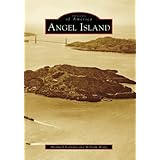
(More customer reviews)This book is about Angel Island in San Francisco Bay. It is a collection of vintage photos and a rich text written by former Mayor Branwell Fanning and journalist William Wong, the native son whose ancestors had successfully passed the Angel Island Immigration Station.
The introduction gave a comprehensive historical overview from the glacier age to the recent years with eight chapters of photos supplemented by a text page orientation. Chapter 1 starts with the Early Years as a den of outlaws and a favorite arena for dueling. Of interest was a picture of Don Antonio Maria Osio who was the Mexican owner 1839-1860.
Chapter 2 focused on the Military History. It served in Civil War, Indian Wars, Spanish-American Wars, the Philippine Insurrection as well as WW I & II. Included are photos of artilleries, bunkers, tents, housing, soldiers, Italian POWs, German civilian seamen. This chapter ends with a couple pictures of USS Delta Queen, which Fanning served.
The following chapter is short with only 14 pictures in Quarantine Station. It started work in 1891 on SS China in detecting disease. Passengers mostly Chinese had to go through strip, scrub and disinfections with baggage being fumigated before heading to shelters - more demanding procedures than millennium security. Infectious diseases passengers either received quarantine medical care or deportation. The photos on p.49 showed three huge chemical steams disinfection steel tubes. A picture on p.51 showed Chinese on board US Public Health Service steamer for quarantine and another on p.52 waiting to be cleaned and disinfected.
Bill wrote Chapter 4 with 40 pages of archive photographs on the Immigration Station. The facing page 56 featured a drawing from PUCK Magazine, showing an American woman with a 5-point star on her hair and a steam engine train falling off her lap, had a pair of scissors engraved 19th Century Progress at a Chinese Mandarin pigtail in words "worn out tradition". This chapter showed the significance as the immigration processing facility for Japanese, Indians, Russians, Africans and Europeans in addition to Chinese. Between 1910 - 1940, there estimated 175,000 Chinese processed and Chinese food was served. The Chinese kitchen team helped in connecting inside with outsider for coaching paper for interrogations on "Paper Son", in response to the 1882 Chinese Exclusion Act. The rare picture on p.68 showed half a banana as the crib sheet carrier. The photo p.63 was a beautifully carved poem in Chinese on barrack wall by a detainee for posterity understanding his saga. Surprisingly, there were many pictures with women and children from different continents. There were two Chinese women pictures on p.72, top one with three women and bottom fourteen with three children. It was a rare sight as incoming Chinese women were suspicious of prostitutes. The picture on p.67 revealed Chinese women living quarter: three sets of three levels bunks, each level with four beds, an occupancy of 36. The Chinese men one on p.88 showed 10 rows each with five double bunks, a total of 100. It was a sharp contrast to San Francisco City 500-footage demand on Chinatown residents. Two pictures on p.79 showed men and boys were bare chested for medical check-up. The treatable disease found on Chinese would be ground for further detention or deportation. Tye Leung on p.84 was the first Chinese woman hired in the service and she married a white immigration inspector. This interracial marriage prompted their resignation due to racial pressure. This chapter ends with National Historic Landmark designation with a picture of Park Ranger Alexander Weiss, who called attention to Chinese poems and the two Chow, Paul and Christopher among others pushed hard in preservation and designation.
Chapter 5 was short with only three pages. It was interesting that this Pacific Island provided maritime navigation signals by sight and sound in three lighthouses. The mighty bell on p.99 reminded its bygone glory.
The following was a chapter on Missile Base. Cold War once again turned it into an outpost with full military installation. The collection illustrated the sophisticated defense system against air attacks.
Chapter 7 showed the Transition with pictures of Italian POWs, empty buildings and the ghost town. The last chapter was the State Park. It was a favorable spot for holiday-makers
This book gives a comprehensive history on the different combination segments of Angel Island. It is like Ellis Island to process immigrants but lack of the compassion of the Statue of Liberty poem:
Give me your tired, your poor,
Your huddled masses yearning to breathe free,
The wretch refuse of your teaming shore.
Send these, the homeless, tempest-tost to me,
I lift my lamp beside the golden door
This Island was the fearful guarding Angel at Golden Gate to keep immigrants, especially Chinese from entering the Gold Mountain. Surviving the lengthy and tedious quarantine, physical exam and interrogations meant a new life in the new world. Angle Island was the enforcer of 1882 Chinese Exclusion Act which politicians framed and blamed Chinese as the main source of all problems from economic, social to moral. This book, especially Chapter 4 highlights the historical importance in US immigration policy. With this unusual landmark, it helps in understanding the 1882 Chinese Exclusion Act, an immigration policy based on race and addressing the impact of the 2007 Immigration Reform which sacrifices family preference in a new visa point system - education, employment and English proficiency, with a racial agenda. Even though this book does not include a reading lists about 1882 Chinese Exclusion Act, Paper Son, Chinese poem, it will be a good companion and orientation for visitors when the Island reopens in early 2008 after restoration. This book will lead readers to explore and learn more about Asian immigration in the West Coast.
Click Here to see more reviews about: Angel Island (Images of America: California)
Angel Island, in the Town of Tiburon, is a mile-square jewel set in San Francisco Bay that attracts thousands of visitors each year. Few of those who hike, bike, camp, or enjoy the spectacular vistas in this California State Park realize its diverse history. From the Spanish ships that anchored at Ayala Cove in 1775 to the 1960s cold war era missile silos, Angel Island has endured to become one of the most popular parks in the state. Although many building were demolished, there are still countless reminders of the island's multifaceted evolution, including a quarantine station, army base, and immigration station.
 Get 22% OFF
Click here for more information about Angel Island (Images of America: California)